

 The Local - Mt Victoria
A couple living in the same Mt Victoria house for nearly five decades has some stories to tell, as Jane O’Loughlin found out.
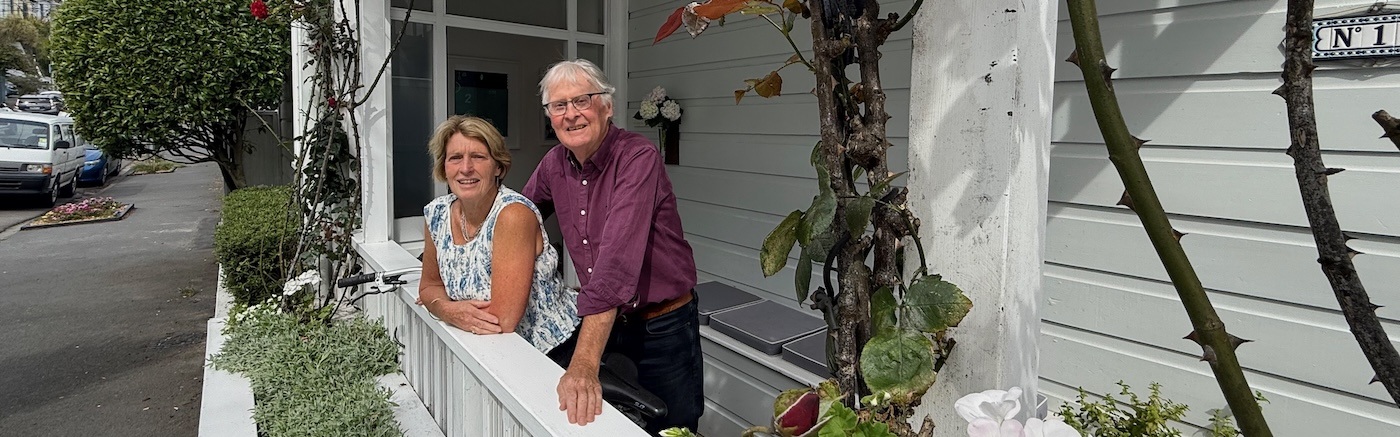
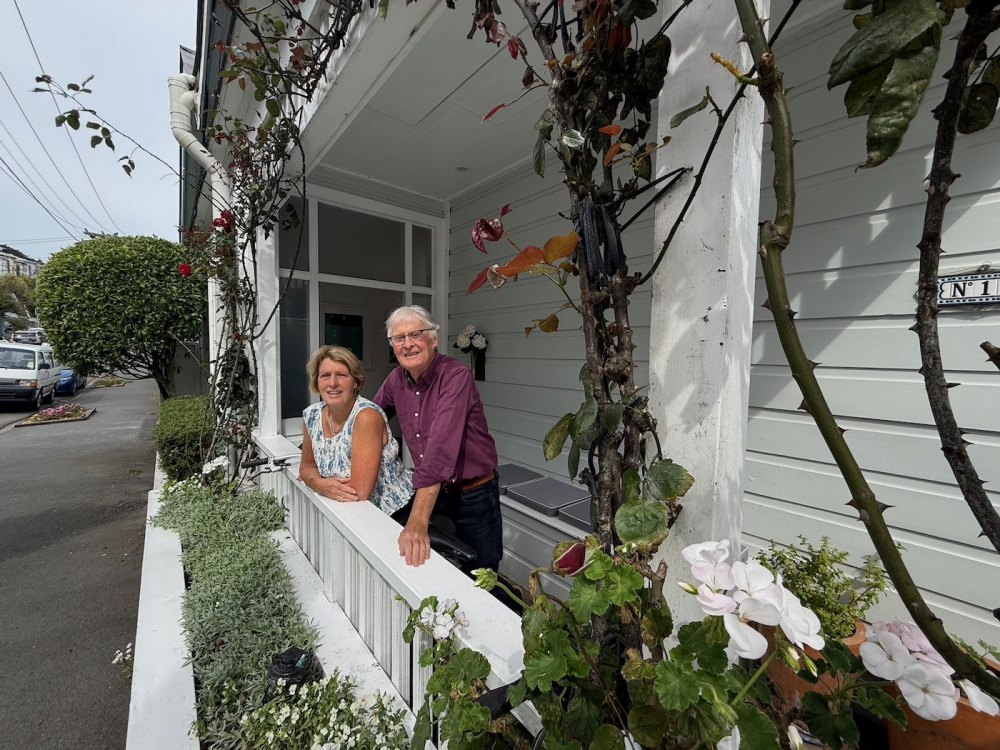
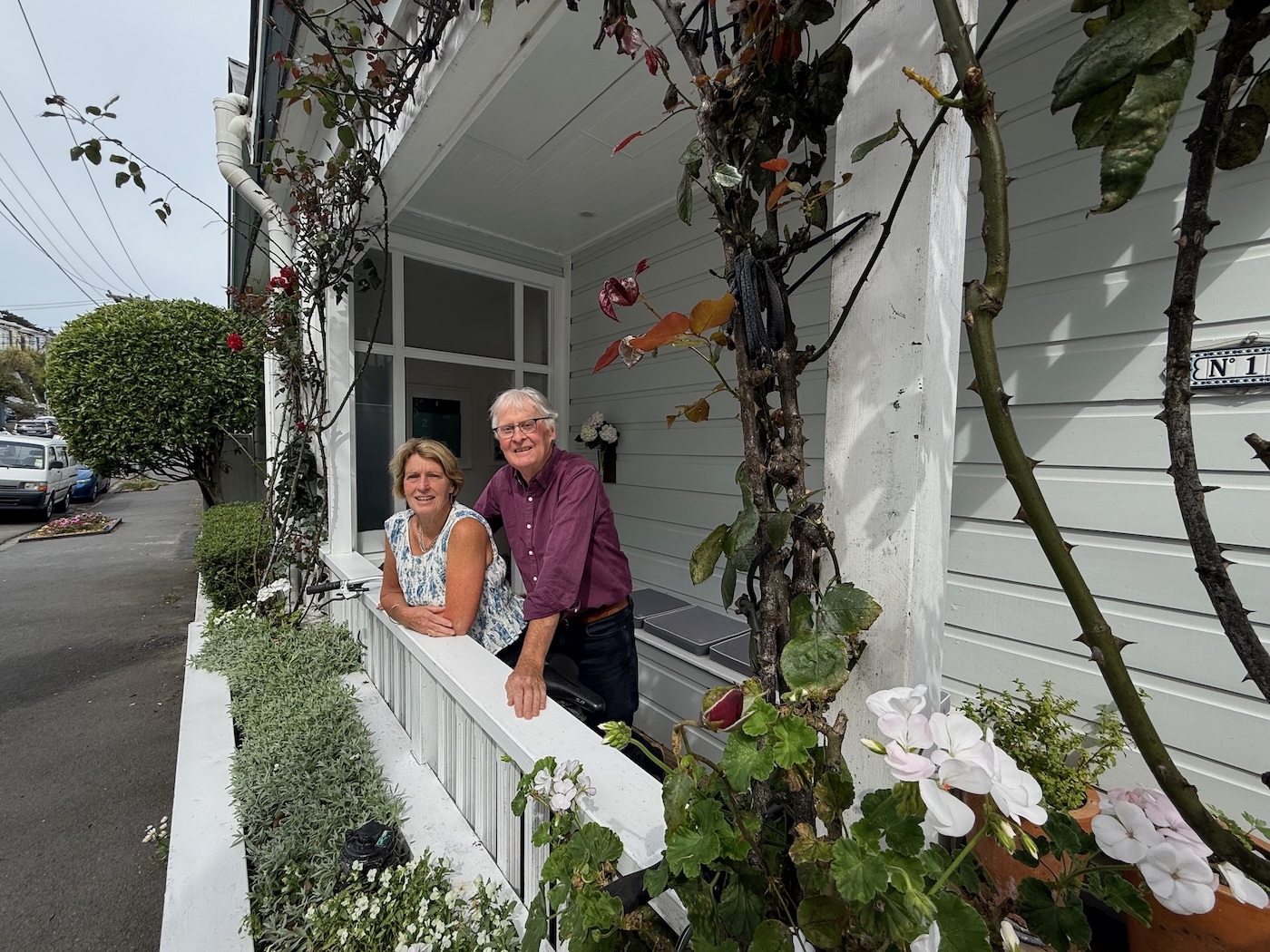
Rob Brown and Di Jordan have lived nearly 50 years in their Scarborough Terrace home. In that time, it’s gone from wild party house hosting actors and exotic dancers to busy family home at the nexus of a familiar and much-loved community.
It all started when Rob arrived as a flatmate in the house in 1977. Number 12 was then known as the ‘Close to Home’ house, as it happened to house a lot of actors and workers from the popular 1970s TVNZ sitcom that was based in Wellington. Other actors and television industry people were in the neighbourhood including Jim Moriaty living next door. With lots of students in the street, Scarborough Terrace was known for its parties, including some epic ones at number 12.
Rob: “How we didn't set the place on fire and things like that, I don't know. There was one where we had all plastic streamers down the hall, and everybody had to come in through these streamers, and, you know, people smoked in those days!”
He recalls one memorable event when a flatmate did some publicity photography for the Club Exotic strip club on the corner of Cuba and Vivian Streets. As a result, the Club Exotic team promised to “bring the party” to the next event at Scarborough Terrace, which is how George Beyer (later the famous Georgina) ended up dancing to ‘Sweet Transvestite’ from the Rocky Horror Picture Show in Rob’s lounge.
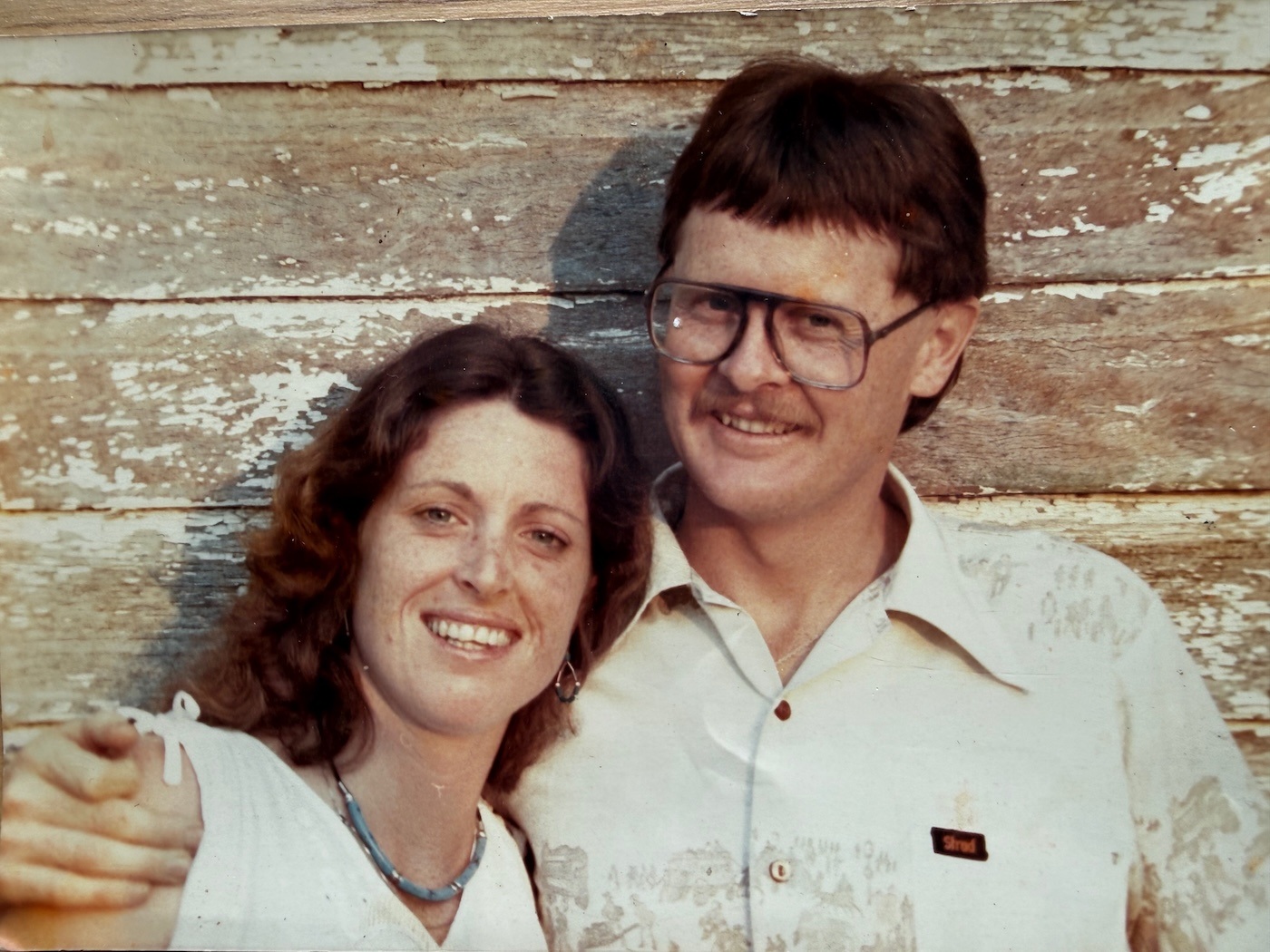
Two things shaped history for the couple.
In 1978 Di responded to a flatmate wanted ad at Scarborough Terrace, and moved into the then all male flat.
Around that time, she says, “there was a real attitude towards Mount Victoria. It was considered to be quite dangerous.”
One family in the street attracted multiple police visits due to its well-known links to the Mongrel Mob.
Di: “We got to know them pretty well because they were on the street. Actually, really great guys.”
In 1979 Rob was able to buy the house off the owner who was in urgent need of a sale, setting the scene for a long history at the house.
Rob and Di married in 1985. As they were “never to going to be married in a church” their wedding took place at Crossways community centre which was then on the corner of Elizabeth Street and Brougham Street. They packed the wedding party into a red Toyota van to drive down, and the reception was at the Basin Reserve.
Soon after, kids arrived. Two daughters and a son led to involvement in the local preschool as helpers and a stint by Rob on the Clyde Quay School board of trustees.
To make ends meet, the family took in boarders and then later international students.
Di: “Our kids grew up thinking that having someone from another country living in your home was normal. They knew no different. And we never thought to say to them, this is not normal, because it's just what we did. At the table each night, there'd be a person from a different country. It was it was win-win for everybody. We loved it. It was so enriching.”
Many friendships made through the visitors have endured over the years, giving Rob and Di connections around the globe.
Hockey has been a passion for Di, and that included coaching local teams. She found that sport was a great opportunity for children from a cross section of society to come together and find a non-judgemental and supportive space that was their own.
The couple have instigated regular street parties over the years, some of them memorable, like the time Julia Deans and another member of Fur Patrol – who lived in the street- gave a concert.
Another time Rob recalls how the police turned up with a paddy wagon and truncheons, thinking some out-of-control teenage party was underway, only to find a street gathering that included children and elderly. They stopped the party anyway, on the basis the group didn’t have a permit to close the street.
Rob: “We never did!”
Di: “We were slight rule breakers I suppose.”
Reflecting on the years that have passed and seeing generations come and go, Di says there have been clear cycles.
In the 1970s the area was dominated by Greek families in house and renters crammed into houses that had been divided into flats, and it certainly wasn’t middle class.
From high density renting in the 1970s the area slowing evolved into families with young children, who turned rental homes back into single dwellings. In the last ten years, however, she has observed homeowners moving away but retaining their homes and renting them out. There has been a change in the number of young families around, due to the higher cost of housing.
Although the composition of the suburb has changed, and become more middle class, Rob and Di believe the suburb attracts a certain kind of person wants to be part of a community, that makes it special.
“There's no arrogance. [people tend to be] solid, humble, good citizens, who, in the main, have worked hard their whole lives to get to where they are to today. There's no ‘of right’. It’s not like ‘first boat Christchurch’ at all,” says Di.
“You wouldn't choose to come in here if you had the attitude of status. You’d go to Oriental Bay. People are making a choice to come here because they want to be in a community like this,” says Rob.
Children have come and gone from the house, and some of them have returned to stay with grandchildren in tow.
The couple have a laugh recalling a chance meeting a neighbour from their earlier life, who couldn’t believe Rob and Di were still in the same house decades later, and married to each other.
But they wouldn’t have it any other way.
OTHER STORIES
... loading ...
NEWS BRIEFS – May
Caretaker’s cottage to go
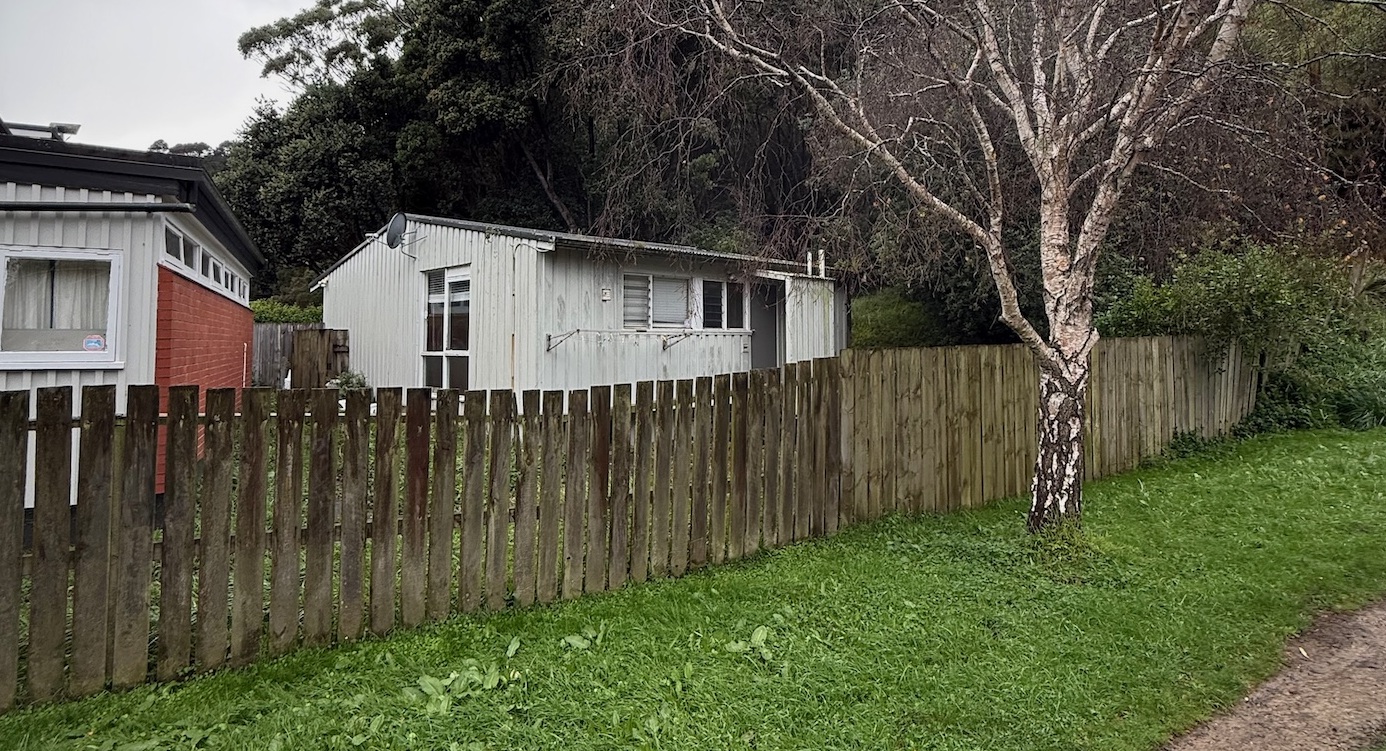
The caretaker’s cottage at Victoria Bowling Club will soon be removed.
A condition of the club’s lease with Council, approved in 2022 was that the club-owned building should be removed at the club’s cost.
The Wellington City Council said that once removed, the area will be reinstated as green open space within the club’s leased area on the Town Belt.
The Mt Victoria Residents’ Association had asked the council whether the building could be reused for public toilets.
However, the council said after looking into it, that due to the building’s location, the cost to retrofit it, and safety considerations, it was not considered a suitable option.
No thump from the bumpless hump
Alterations were made to a pedestrian crossing outside Clyde Quay School after noise concerns were raised by nearby residents.
The raised crossing had been installed last year to encourage drivers to slow down, but in recent months further work was carried out to make the hump less pronounced, by lengthening the approach to the raised section on both sides.
A parent of a student at Clyde Quay School who did not want to be named said he thought the original design was better in terms of safety: "If it's not as steep cars will continue to go fast."
A spokesperson for Wellington City Council said the work was “in response to an enquiry from a local building corp concerned with some noise associated with the gradient of the ramp.”
“Footpath and road maintenance in the area coincided with this work to ensure efficient use of traffic management while limiting impact on corridor users.”
Walk this way
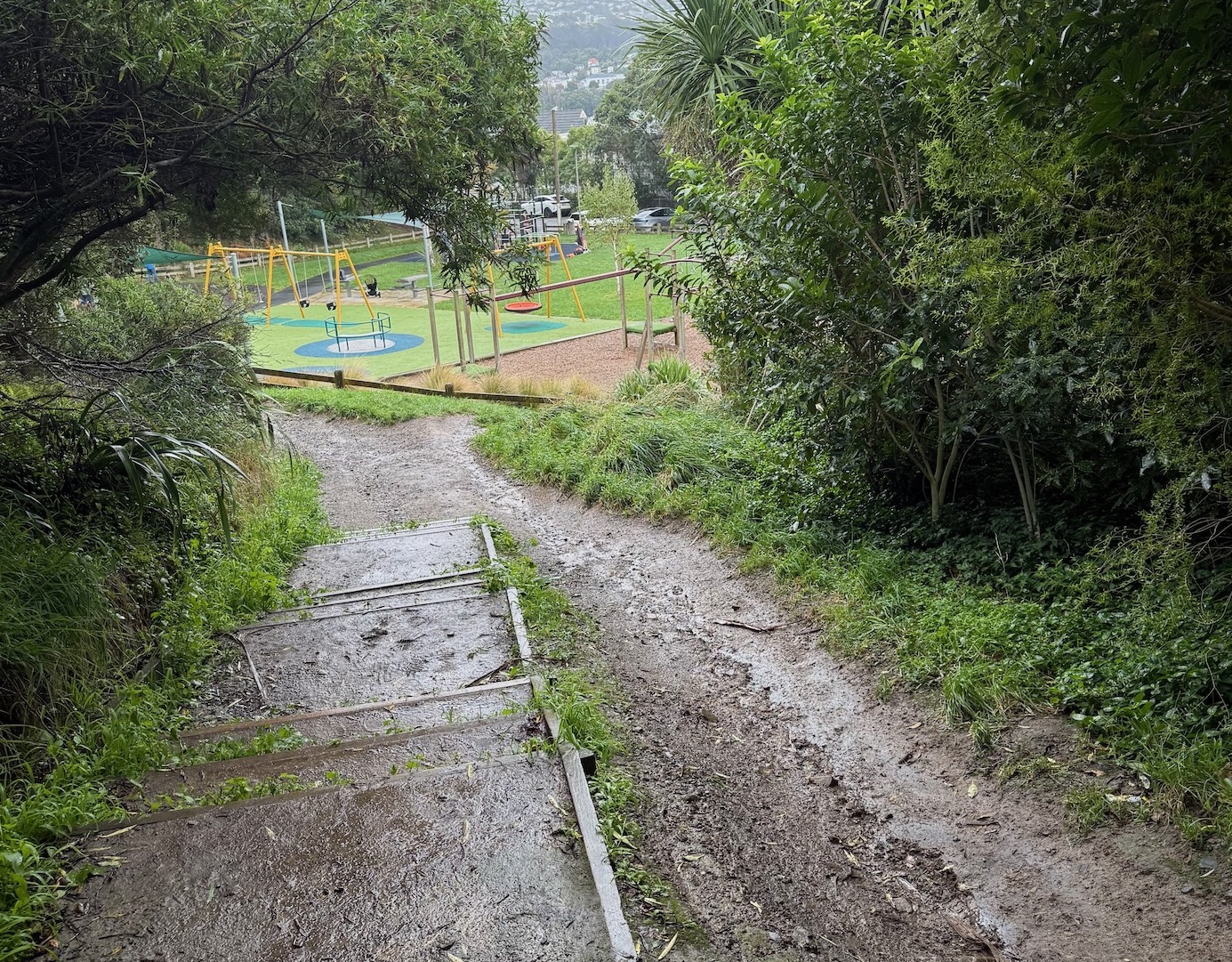
An example of a ‘hotspot’ where cyclists and walkers can collide.
An example of a ‘hotspot’ where cyclists and walkers can collide.
Three sections of track on Matairangi-Mt Victoria may be designated ‘walking only’ following a review of safety on the maunga.
The Wellington City Council set up a process to look at establishing walking only tracks in 2022 following concerns about clashes between walkers and cyclists, and safety issues with downhill mountain bikers cutting across tracks.
As a result of discussions and analysis council staff identified 15 ‘hotspots’ and made recommendations for each, ranging from closing the track, to changing the designation or making other safety improvements such as better signage.
The 15 safety improvements put forward include three changes to make sections of tracks ‘walk only’, one to designate a section ‘uphill biking only’ and one to close an unnamed track.
Council staff have shared the recommendations with their working groups and are now aiming to deliver a Council Committee paper in June 2026, which will have an opportunity for oral submissions.
Collision on Austin Street
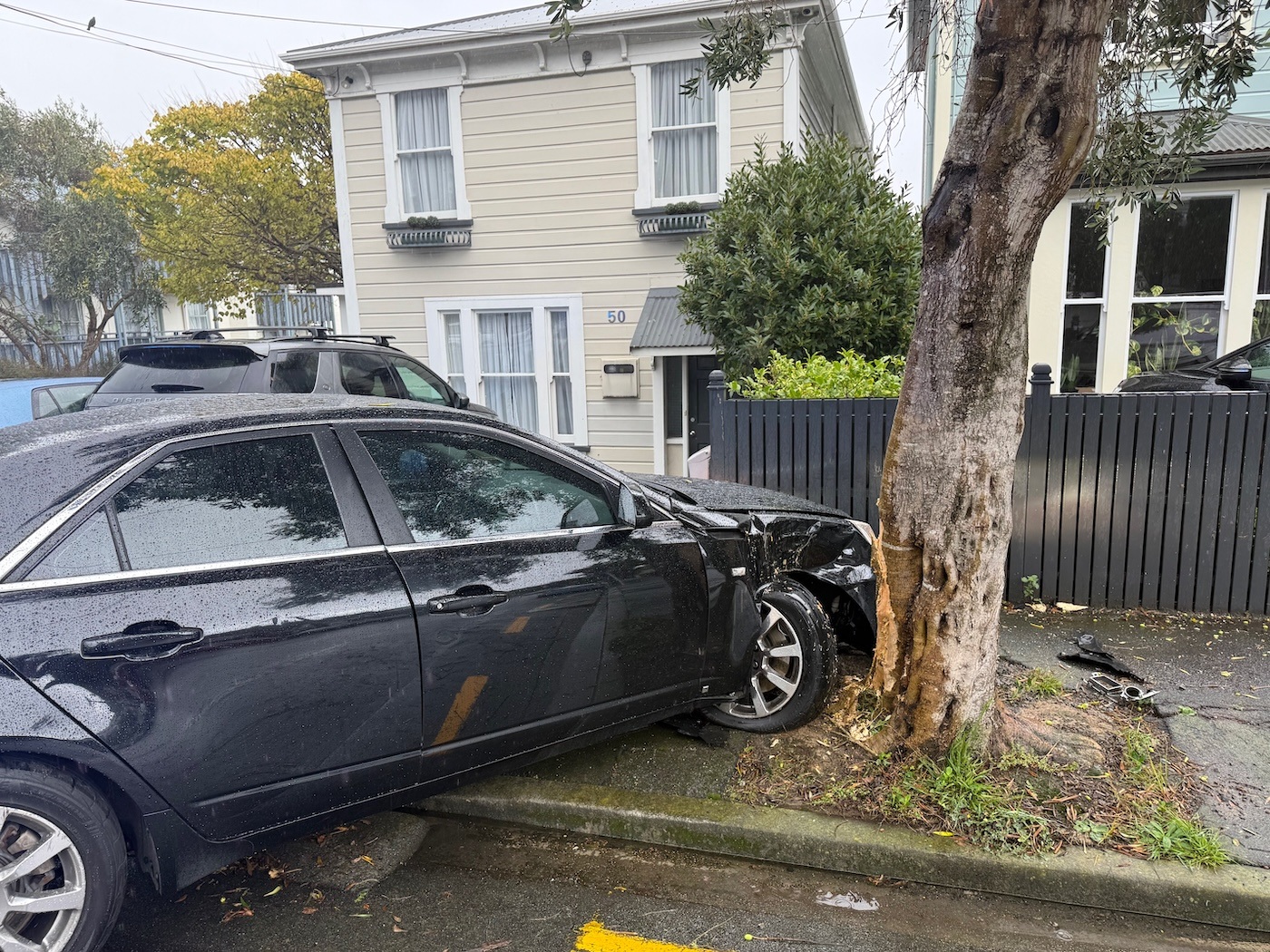
Wet weather led to a collision on Austin Street in April.
According to a police officer at the scene, a car heading up Queen Street hit a car on Austin St. The car that was hit ended up swerving into a tree on Austin Street. No one was hurt.